


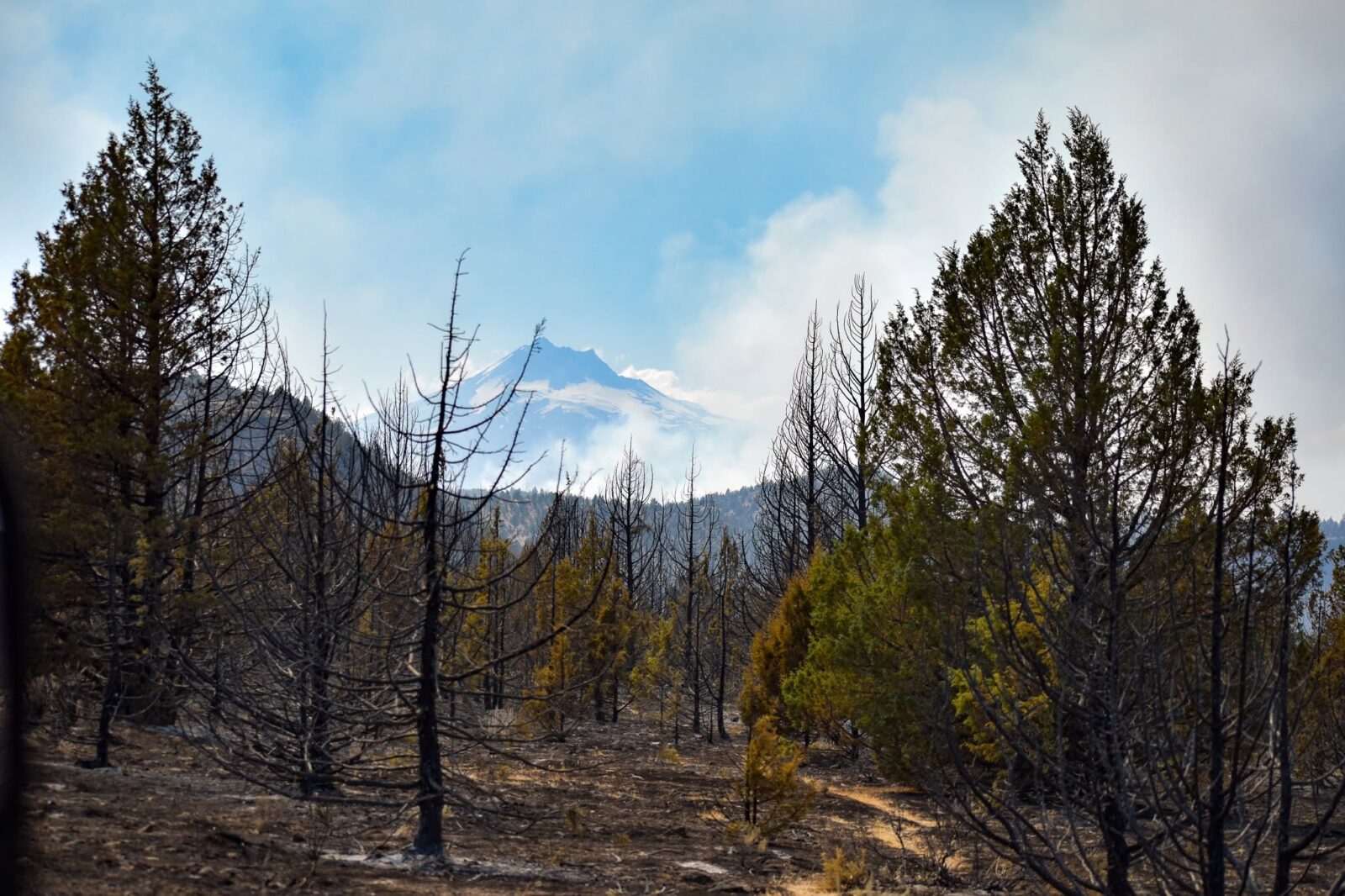
The Bench Fire response on the Warm Springs Reservation is moving beyond the immediate firefighting effort, with tribal natural resources officials preparing for a lengthy process of assessing and stabilizing land affected by the fire.
Austin Smith Jr., general manager of the Confederated Tribes of Warm Springs Branch of Natural Resources, said the Bench Fire created an especially difficult situation because of rapidly changing weather, strong winds, multiple fires burning throughout the region and limited firefighting resources.
Smith said his role during the incident included serving as a tribal agency representative as the Bench and Beachcomb fires came together. He said tribal leadership and local knowledge of the landscape were critical as the fire moved through different fuel types.
Smith has served as Branch of Natural Resources general manager for four years. Before that, he spent approximately 15 years involved in firefighting and resource advising, including work as a Type 2 firefighter. He said that experience and familiarity with the Warm Springs landscape helped the Tribes respond as conditions changed.
The fire created a chaotic situation, Smith said, with wind, rapidly moving fire and firefighting resources stretched thin by numerous incidents throughout Oregon and Washington.
The Bench Fire began July 23 south of Warm Springs and eventually burned tens of thousands of acres. By July 30, the fire had reached 64,406 acres and was 22 percent contained. Firefighters were using dozers, helicopters and hand crews to establish and strengthen containment lines around the fire.
Protecting homes and community members remained a major priority. Firefighters continued monitoring areas within the fire perimeter for heat and smoke while structure protection crews worked around homes. At one point, a roughly seven-mile sprinkler system capable of pumping 3,000 gallons of water per minute was installed above Warm Springs along with dozer lines to help protect the community.
But Smith said the work does not end when flames are extinguished or containment reaches 100 percent.
Burned Area Emergency Response
One of the next major steps is the Burned Area Emergency Response, or BAER, process. The BAER program is designed to assess conditions after a wildfire and identify emergency actions needed to protect people, property, natural resources and cultural resources from additional damage.
Smith explained that the BAER team is a national resource made up of specialists in a variety of fields. The team serving the Pacific Northwest is led by a Warm Springs tribal member.
The team can include hydrologists, fisheries specialists, wildlife biologists, cultural resource specialists and GIS professionals. When an assessment is needed, the Tribes can request the team to evaluate the burned area and identify potential emergency treatments.
The BAER work takes place after the initial fire suppression operation, although some suppression rehabilitation may still be underway. That can include addressing roads that have become dangerous because of burned trees, damaged culverts or other fire-related impacts.
Smith said health and human safety are among the highest priorities because post-fire hazards can remain for years.
Local natural resources staff can also participate in the assessment. Staff with appropriate BAER qualifications can document damage caused during firefighting operations, including miles of dozer lines, burned areas and impacts to fences, water systems and other infrastructure.
The fire’s extensive impact on rangeland and pine forest also creates concerns about soil erosion and runoff. With much of the vegetation burned away, rainfall and snowmelt can move across the landscape more quickly.
Smith said severely burned soils can become hydrophobic, meaning water has difficulty infiltrating the soil and instead runs across the surface. That can increase erosion and create problems for roads, watersheds and other infrastructure.
BAER assessments help identify and prioritize those risks. Potential emergency treatments can include reseeding burned areas, stabilizing banks, placing straw or wood chips in vulnerable locations, repairing or replacing culverts and, where necessary, constructing bridges or other infrastructure.
The goal is to address problems before future rain or snow events cause additional damage.
Protecting Cultural and Natural Resources
Smith said the BAER process also considers cultural and natural resources that are important to the Confederated Tribes of Warm Springs.
Emergency actions can be used to protect cultural and historical resources as well as sensitive species and habitats. The Tribes maintain information about culturally important species and resources that can guide post-fire management.
Wildlife and first-food resources may require special attention following the fire. Smith also pointed to species such as eagles and other raptors that may be protected under threatened or endangered species requirements.
Another concern following a large wildfire is the spread of invasive and noxious weeds. Ground disturbance from dozers, firefighting vehicles and other suppression activities can create opportunities for invasive species to establish themselves.
The BAER process can include reseeding and other treatments designed not only to stabilize the landscape but also to reduce the risk of invasive species taking over burned areas.
The Tribes may also have to evaluate commercial timber affected by the fire. Smith said burned timber on reservation lands could potentially be assessed for emergency salvage, allowing the Tribes to recover some value from timber investments while addressing areas damaged by the fire.
The recovery process will take considerably longer than the initial firefighting operation. Smith said stabilization could extend over multiple years, with natural resources staff continuing to evaluate how the land, watersheds, wildlife habitat and infrastructure respond to the effects of the fire.
For the Confederated Tribes of Warm Springs, the Bench Fire response therefore represents two interconnected efforts: protecting people and property during the fire, and protecting the reservation’s natural, cultural and economic resources during the years of recovery that follow.
